Total Solar Eclipse 2026: Where to Watch
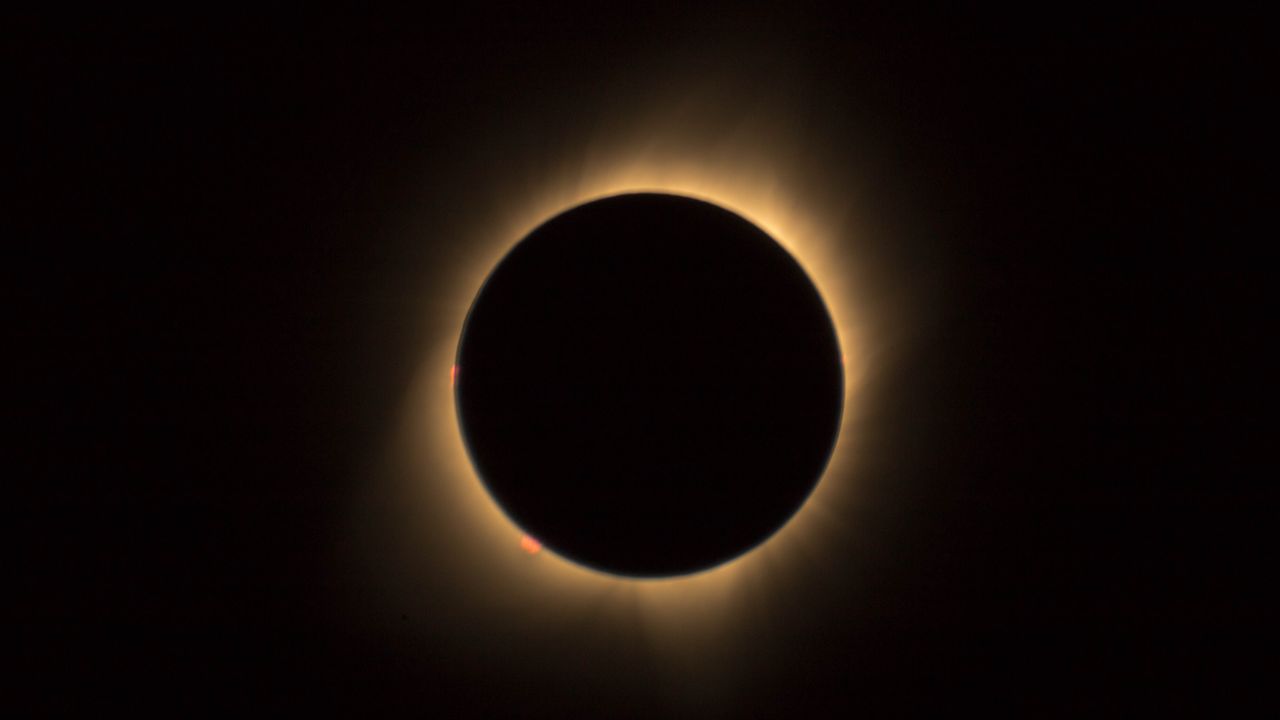
On the evening of August 12, 2026, the Moon's shadow sweeps across the North Atlantic and turns day into deep twilight over three countries and a sliver of a fourth: Greenland, Iceland, Spain and a small corner of northeastern Portugal. It is the first total solar eclipse visible from mainland Europe since 1999, the first from Spain since 1905, and the first from Iceland since 1954. For Iceland it is also the only total solar eclipse of the entire 21st century.
Maximum Totality
2 min 18 s
Reached just off the west coast of Iceland in the North Atlantic
The eclipse track is a lesson in physical geography by itself. The shadow first touches Earth at sunrise over Russia's remote Taymyr Peninsula in Siberia, brushes past the North Pole, then runs down the fjord coast of eastern Greenland and across western Iceland, including Reykjavík. From there it crosses the open North Atlantic and makes landfall again in Galicia, sliding across northern Spain before leaving Earth at sunset near the Balearic Islands. The band of totality is roughly 300 kilometers wide. Everything outside it, which includes most of Europe, sees only a partial eclipse.
Totality Times and Durations in Major Cities
| City | Country | Totality Begins (local) | Duration |
|---|---|---|---|
| Reykjavík | Iceland | 5:48 pm | ~59 seconds |
| A Coruña | Spain | 8:27 pm | ~1 min 16 s |
| Oviedo | Spain | ~8:27 pm | ~1 min 48 s |
| Burgos | Spain | ~8:28 pm | ~1 min 43 s |
| Bilbao | Spain | ~8:28 pm | ~29 seconds |
| Zaragoza | Spain | ~8:30 pm | ~1 min 24 s |
| Palma de Mallorca | Spain | 8:31 pm | ~1 min 36 s |
| Valencia | Spain | 8:32 pm | ~1 minute |
Reykjavík
CountryIcelandTotality Begins (local)5:48 pmDuration~59 secondsA Coruña
CountrySpainTotality Begins (local)8:27 pmDuration~1 min 16 sOviedo
CountrySpainTotality Begins (local)~8:27 pmDuration~1 min 48 sBurgos
CountrySpainTotality Begins (local)~8:28 pmDuration~1 min 43 sBilbao
CountrySpainTotality Begins (local)~8:28 pmDuration~29 secondsZaragoza
CountrySpainTotality Begins (local)~8:30 pmDuration~1 min 24 sPalma de Mallorca
CountrySpainTotality Begins (local)8:31 pmDuration~1 min 36 sValencia
CountrySpainTotality Begins (local)8:32 pmDuration~1 minute
Times are local and rounded to the nearest minute, so check an exact calculator for your precise spot before heading out. Bilbao's short 29 seconds is a reminder of how sharp the geometry is: the city sits close to the edge of the path, where totality shrinks toward zero. And because Spain catches the very end of the track, the Sun actually sets before the partial phases finish.
The Near Miss
99.96%
Madrid's partial coverage. The last 0.04 percent is the difference between daylight and darkness.
Two of Spain's biggest cities miss the show by a whisker. Madrid sits just outside the southern edge of the path with roughly 99.9 percent of the Sun covered, and Barcelona just outside with about 99.8 percent. Those numbers sound close enough, but an eclipse is all or nothing: without the final fraction there is no corona, no sudden darkness and no hush of nightfall at half past eight. Farther out, the partial eclipse is still dramatic, with about 94 percent coverage in Dublin and 96 percent in Algiers.
Barcelona has embraced its near-miss status with organized viewings anyway. The city's flagship gathering is at Montjuïc Castle, whose west-facing upper terrace opens to the public from 7:00 pm to 9:30 pm on eclipse evening. Tibidabo, the highest point of the Collserola range, and the Bunkers del Carmel offer the same clear western sightline, CosmoCaixa is running an immersive eclipse planetarium show, and several hotel rooftops are hosting ticketed viewing evenings. Just remember what those gatherings will see: a 99.8 percent partial eclipse, not the black Sun.
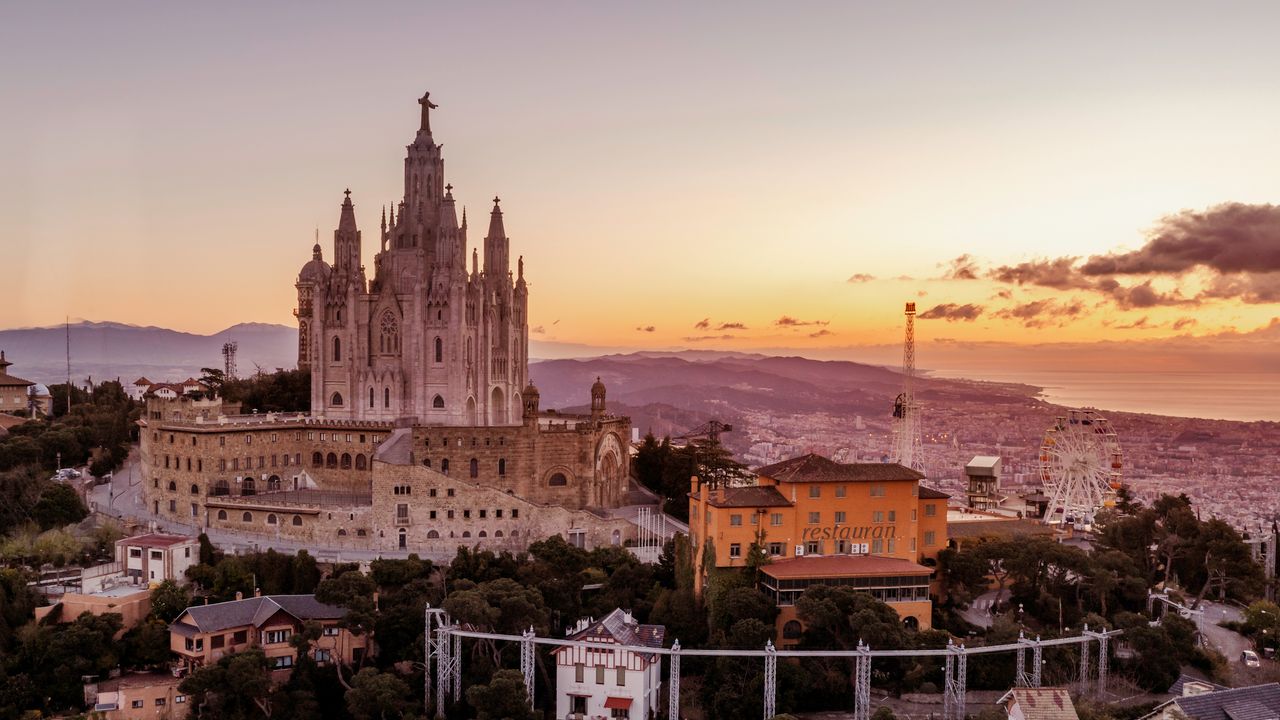
For the real thing, Barcelona residents only need a short trip southwest. The Catalan government and local councils have designated some 20 official observation points inside the totality band, chosen for open horizons and safe access, in towns such as Tarragona, Reus, Cambrils, Valls and Lleida, all roughly one to one and a half hours from the city. The official Eclipsi Catalunya site publishes maps and per-town timings for every point.
Where you stand inside the path matters less than what the local geography does to the clouds. In eastern Greenland, air flowing down off the ice cap dries out as it descends, so the inner fjords of Scoresby Sund average only about 45 percent cloud cover in August, and satellite studies put the odds of a visible eclipse there around 80 percent. Iceland is the cloudiest option: Reykjavík records only about a third of its possible August sunshine, though the lee sides of the western peninsulas, such as Snæfellsnes and the Westfjords, often clear when air spills over the terrain.
Spain is where geography stacks the odds highest. The Cantabrian Mountains wring moisture out of Atlantic air before it reaches the interior, leaving the Ebro Valley around Zaragoza with less than 30 percent average cloud in August. A 21-year satellite study found the eclipse would have been visible from the Ebro Valley in 18 of those years, and from the northern Meseta around Burgos and León in 17. The lush Bay of Biscay coastline tells the opposite story, with clear views in only 10 of the 21 years.
How the Terrain Shapes Your Odds of Clear Skies
| Region | The Geography at Work | Track Record |
|---|---|---|
| Ebro Valley (Zaragoza) | Rain shadow of the Cantabrian range keeps the basin dry | Visible 18 of 21 Augusts |
| Northern Meseta (Burgos, León) | High, dry plateau far from Atlantic moisture | Visible 17 of 21 Augusts |
| Scoresby Sund (Greenland) | Foehn winds descending off the ice cap dry the fjords | About 80 percent odds |
| Balearic coasts (Mallorca) | Stable sea air keeps coasts clearer than the interior | About 75 percent odds |
| Western Iceland | Maritime cloud, broken up in the lee of the peninsulas | Reykjavík sees 32 percent of possible sunshine |
| Bay of Biscay coast | Atlantic moisture piles up against the Cantabrian range | Visible only 10 of 21 Augusts |
Ebro Valley (Zaragoza)
The Geography at Work
Rain shadow of the Cantabrian range keeps the basin dry
Track RecordVisible 18 of 21 AugustsNorthern Meseta (Burgos, León)
The Geography at Work
High, dry plateau far from Atlantic moisture
Track RecordVisible 17 of 21 AugustsScoresby Sund (Greenland)
The Geography at Work
Foehn winds descending off the ice cap dry the fjords
Track RecordAbout 80 percent oddsBalearic coasts (Mallorca)
The Geography at Work
Stable sea air keeps coasts clearer than the interior
Track RecordAbout 75 percent oddsWestern Iceland
The Geography at Work
Maritime cloud, broken up in the lee of the peninsulas
Track Record
Reykjavík sees 32 percent of possible sunshine
Bay of Biscay coast
The Geography at Work
Atlantic moisture piles up against the Cantabrian range
Track RecordVisible only 10 of 21 Augusts
There is one more geographic catch in Spain: the Sun will be very low. Totality arrives around 8:30 pm local time with the Sun only about 10 degrees above the horizon on the north coast, and as little as 3 to 4 degrees from the Balearic Islands. Pick a spot with a completely open view to the west-northwest, such as a hilltop, a west-facing coastline or the edge of the wide Castilian plains. In Iceland the timing is kinder, with totality at 5:48 pm and the Sun comfortably higher in the sky.
If you would rather watch with a crowd, the path is dotted with organized gatherings. Iceland's largest is the Iceland Eclipse Festival in Hellissandur on the Snæfellsnes Peninsula, running August 11 to 15 with music, science talks and art, and the Blue Lagoon is hosting a totality event in its geothermal waters. In Spain, the Umbra Festival in Galicia runs August 11 to 13, the Eclipse Festival in Prades combines telescopes, talks and a planetarium from August 10 to 13, and towns across the path from Galicia to Mallorca have announced public viewings led by local astronomy groups.
A safety note that applies everywhere along the path: the partial phases are never safe to look at without certified ISO 12312-2 eclipse glasses, even with the Sun low on the horizon. Only during the brief window of totality, when the Moon fully covers the Sun, can you look up with the naked eye. Sunglasses are not a substitute, no matter how dark.
Sources and Further Reading
Timings, durations and path details come from NASA and National Eclipse. Cloud statistics and terrain analysis come from Eclipsophile's eclipse climatology study, based on about 21 years of August satellite imagery. Event listings were compiled from organizer and press announcements in August 2026.
- NASA Science: Total Solar Eclipse on August 12, 2026
- Eclipsophile: Total Solar Eclipse 2026 Climatology
- National Eclipse: 2026 Total Solar Eclipse Overview
- Spanish National Geographic Institute: Total Solar Eclipse of August 12, 2026
- Instituto de Astrofísica de Canarias: Two Eclipses That Made History in Spain
- Space.com: 10 Events for the August 12, 2026 Total Solar Eclipse
- Ajuntament de Barcelona: The Eclipse in Barcelona
- Eclipsi Catalunya 2026: Official Observation Points
Standing in the shadow path?
Greenland, Iceland and Spain are only the start of the story. While you wait for totality, see how many European flags you can actually name.
Play the Europe Flag Quiz →Related Articles
Written by
Ziga Straus
I build and run Geography Games on my own, from the games and the artwork to these articles. Everything here is checked against published references, and each article lists its sources at the bottom so you can verify any figure yourself rather than taking my word for it.
