I count a flag when it is the national flag of a UN member state and the crescent is drawn as a symbol in its own right, not as a detail inside a coat of arms or emblem. That rule gives 14. Other lists come out differently: lists of the star and crescent leave out the Maldives, which has no star, and lists of "moon flags" add full moons and moons inside emblems. Those are at the end of this page.
All 14 flags with a crescent moon
- Algeria
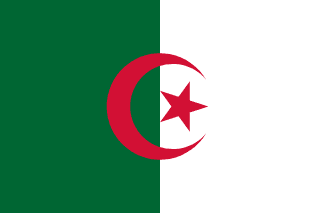
- Stars:
- 1
- The crescent:
- Red crescent and star across green and white halves, raised at independence in 1962.
- Azerbaijan
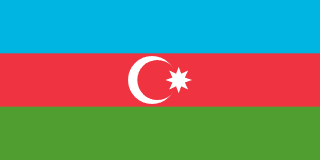
- Stars:
- 1
- The crescent:
- White crescent and eight-pointed star on the red band. The eight points are said to stand for eight Turkic peoples.
- Comoros
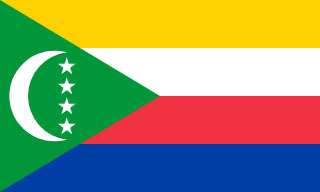
- Stars:
- 4
- The crescent:
- White crescent and four stars on a green triangle, one star for each island, Mayotte included, although France still holds it.
- Libya
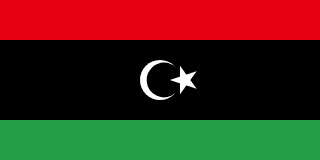
- Stars:
- 1
- The crescent:
- White crescent and star on the black band. This was the flag at independence, and it came back in 2011.
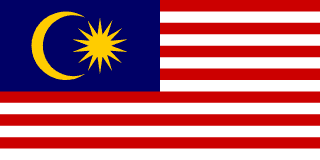
- Malaysia
- Stars:
- 1
- The crescent:
- Yellow crescent and a 14-pointed star, for the country's Muslim majority. Yellow is the royal colour.
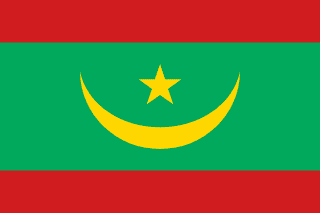
- Mauritania
- Stars:
- 1
- The crescent:
- Yellow crescent and star on green. The red bands were added in 2017 for the blood shed in the fight for freedom from France.
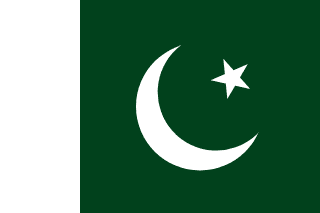
- Pakistan
- Stars:
- 1
- The crescent:
- White crescent for progress and star for knowledge and light, on green. The white stripe stands for religious minorities.
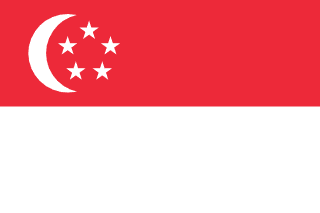
- Singapore
- Stars:
- 5
- The crescent:
- White crescent for a young country growing up, with five stars for democracy, peace, progress, justice and equality.
- Tunisia
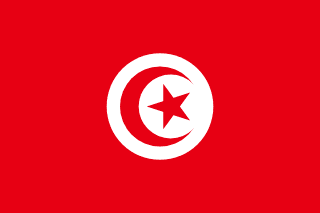
- Stars:
- 1
- The crescent:
- Red crescent and star inside a white disc on red, a design long used by the Ottoman Turks.
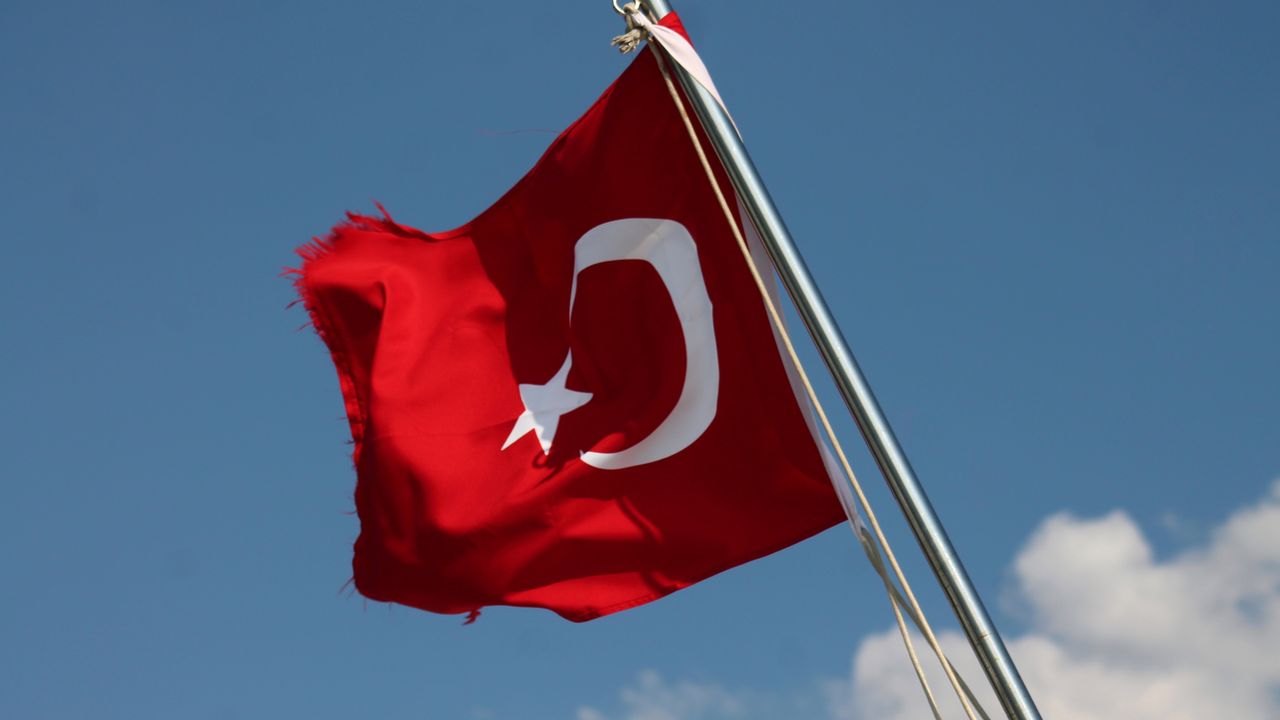
- Turkey
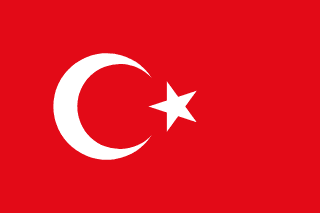
- Stars:
- 1
- The crescent:
- White crescent and star on red. Set for the Ottoman navy in 1793; the star has had five points since about 1844.
- Turkmenistan
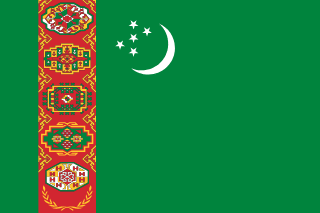
- Stars:
- 5
- The crescent:
- White crescent for faith in a bright future, beside a red stripe of carpet patterns.
- Uzbekistan
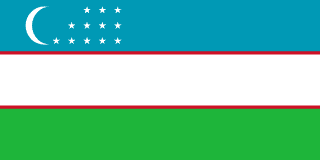
- Stars:
- 12
- The crescent:
- White crescent for the rebirth of an independent republic, beside 12 white stars in the top corner.
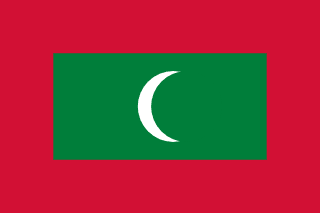
- Maldives
- Stars:
- 0
- The crescent:
- White crescent on a green panel inside a wide red border. No star.
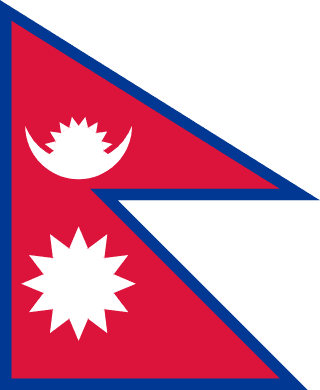
- Nepal
- Stars:
- 0
- The crescent:
- In the upper pennant, a white moon with eight rays and a crescent below it; a sun in the lower pennant.
| Flag | The crescent | ||
|---|---|---|---|
| Algeria | 1 | Red crescent and star across green and white halves, raised at independence in 1962. |
| Azerbaijan | 1 | White crescent and eight-pointed star on the red band. The eight points are said to stand for eight Turkic peoples. |
| Comoros | 4 | White crescent and four stars on a green triangle, one star for each island, Mayotte included, although France still holds it. |
| Libya | 1 | White crescent and star on the black band. This was the flag at independence, and it came back in 2011. |
| Malaysia | 1 | Yellow crescent and a 14-pointed star, for the country's Muslim majority. Yellow is the royal colour. |
| Mauritania | 1 | Yellow crescent and star on green. The red bands were added in 2017 for the blood shed in the fight for freedom from France. |
| Pakistan | 1 | White crescent for progress and star for knowledge and light, on green. The white stripe stands for religious minorities. |
| Singapore | 5 | White crescent for a young country growing up, with five stars for democracy, peace, progress, justice and equality. |
| Tunisia | 1 | Red crescent and star inside a white disc on red, a design long used by the Ottoman Turks. |
| Turkey | 1 | White crescent and star on red. Set for the Ottoman navy in 1793; the star has had five points since about 1844. |
| Turkmenistan | 5 | White crescent for faith in a bright future, beside a red stripe of carpet patterns. |
| Uzbekistan | 12 | White crescent for the rebirth of an independent republic, beside 12 white stars in the top corner. |
| Maldives | 0 | White crescent on a green panel inside a wide red border. No star. |
| Nepal | 0 | In the upper pennant, a white moon with eight rays and a crescent below it; a sun in the lower pennant. |
The stars column counts the stars beside the crescent. Malaysia has one star with 14 points, and Azerbaijan one with eight. Uzbekistan has the most, 12, which Britannica reads as the months of the year.
Where the crescent and star come from
The symbol is older than Islam. Britannica traces the crescent and star to the ancient city of Byzantium, later Constantinople and now Istanbul. The Ottoman Turks took it up after they conquered the city, and their red naval flag of 1793, with a white crescent and star, is the ancestor of the Turkish flag today. Its star had eight points at first; the five-pointed star came in about 1844.
Because so many Muslim-majority states adopted it, the crescent and star is now widely read as a sign of Islam. On some flags it does mean that: Britannica gives Islam as the meaning for Malaysia, the Comoros and the Maldives. On others it means something else. Singapore's crescent stands for the growth of a young country, and Britannica notes that, unlike on other flags, it has nothing to do with Islam. Pakistan gives its crescent to progress, and Uzbekistan to the rebirth of an independent republic.
Flags with a crescent moon and five stars
Two flags have a crescent with five stars: Singapore and Turkmenistan. They are easy to tell apart. Singapore's is red over white, with the crescent and a ring of five stars in the top corner. Turkmenistan's is green, with the crescent and stars near the top and a dark red stripe of five carpet patterns down the side.
Sources differ on what Turkmenistan's five stars mean. Britannica gives the five senses; Wikipedia's article cites the five provinces. The five carpet patterns belong to five Turkmen tribes.
The crescent without a star
The Maldives has the only national flag with a plain crescent and nothing else: white on a green panel, framed by a red border. Britannica says the crescent stands for Islam, the national religion, as well as progress, prosperity and peace.
Nepal counts too, though its crescent is part of a bigger moon. In the upper of its two pennants, a white moon with eight rays sits above a crescent. The lower pennant holds a sun with 12 rays. Britannica says the two symbols express the hope that the country will last as long as the sun and moon.
Moons that are not on the list
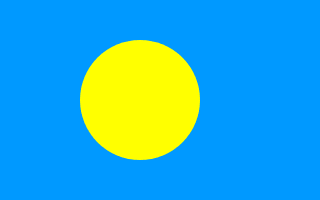
- Palau
- Why it is not counted:
- A golden full moon on blue, set a little towards the pole. A full moon, not a crescent.
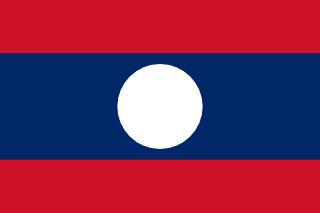
- Laos
- Why it is not counted:
- A white disc on blue between red stripes. Its designer meant the unity of the Lao people; it is also read as a full moon over the Mekong.
- Mongolia
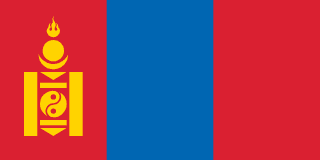
- Why it is not counted:
- A crescent moon is one part of the Soyombo emblem on the red stripe at the pole.
- Brunei
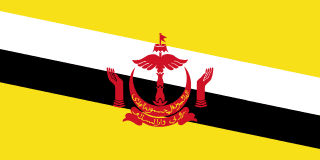
- Why it is not counted:
- The crescent, for Islam, is inside the red coat of arms in the middle.
- Sahrawi Arab Democratic Republic (Western Sahara)
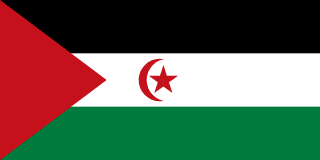
- Why it is not counted:
- A red crescent and star on the white stripe, but the republic is not a UN member.
| Flag | Country | Why it is not counted |
|---|---|---|
| Palau | A golden full moon on blue, set a little towards the pole. A full moon, not a crescent. |
| Laos | A white disc on blue between red stripes. Its designer meant the unity of the Lao people; it is also read as a full moon over the Mekong. |
| Mongolia | A crescent moon is one part of the Soyombo emblem on the red stripe at the pole. |
| Brunei | The crescent, for Islam, is inside the red coat of arms in the middle. |
| Sahrawi Arab Democratic Republic (Western Sahara) | A red crescent and star on the white stripe, but the republic is not a UN member. |
Northern Cyprus, which only Turkey recognises, also flies a red crescent and star, between two red bars on white. Add it and the Sahrawi Republic, and a count of crescent flags reaches 16.
How to tell the crescent flags apart
Sort them by the background first, then look at the detail:
- Red field: Turkey (crescent and star on plain red) and Tunisia (inside a white disc).
- Mostly green: Pakistan (white stripe at the pole), Mauritania (yellow crescent, red bands), the Maldives (red border, no star) and Turkmenistan (carpet stripe).
- Stripes: Libya (red, black, green), Azerbaijan (blue, red, green), Uzbekistan (blue, white, green, with 12 stars) and the Comoros (four stripes and a green triangle).
- Halves: Algeria (green and white) and Singapore (red over white).
- Red and white stripes: Malaysia, with a yellow crescent on a blue corner.
- Two pennants: Nepal, the only national flag that is not a rectangle, with the moon and crescent in the upper pennant.
To check you can put the crescent in the right place and facing the right way, try Paint the Flag, which makes you colour a flag from memory. Stars have their own article, and the flags people mix up most are in flags that look alike. You can also race a friend to name these flags in Battle Flags.
Can you name them from the flag?
Guess the Flag shows one flag a day and gives you distance and direction hints after each wrong guess.
Play Guess the FlagQuestions people ask
Which countries have a crescent moon and star on their flag?
Which flag has a crescent moon and five stars?
Does a crescent moon on a flag always mean Islam?
No. The crescent and star is older than Islam, and Singapore's crescent stands for the growth of a young country. It does stand for Islam on the flags of Malaysia, the Comoros and the Maldives.
Is there a flag with a crescent and a cross?
No national flag today has both. Britannica records one from history: in Egypt's revolt of 1919, people flew a green flag with a white crescent and cross to show Muslims and Christians standing together.
Sources
- Britannica: flag of Turkey
- Britannica: flag of Tunisia
- Britannica: flag of Pakistan
- Britannica: flag of Algeria
- Britannica: flag of Libya
- Britannica: flag of Mauritania
- Britannica: flag of Azerbaijan
- Britannica: flag of Malaysia
- Britannica: flag of Comoros
- Britannica: flag of Singapore
- Britannica: flag of Turkmenistan
- Wikipedia: Flag of Turkmenistan
- Britannica: flag of Uzbekistan
- Britannica: flag of the Maldives
- Britannica: flag of Nepal
- Britannica: flag of Palau
- Wikipedia: Flag of Laos
- Wikipedia: Soyombo symbol
- Britannica: flag of Brunei
- United Nations: Member States
- Wikipedia: Flag of the Sahrawi Arab Democratic Republic
- Wikipedia: Flag of Northern Cyprus
- Britannica: flag of Egypt